Swami Kriyananda’s Path of Discipleship
I share with you, ways in which Swamiji’s life has been a life of discipleship. Swamiji said he had two goals in life; one was to find God and the other was to help others find God. These are two of the aspects when we make our vow of discipleship, and Swamiji has lived them to perfection. One is the inner work that we must do to find God, to progress on the spiritual path and the other is that we don’t keep what we have from our inner work for ourselves but rather share it with others in the way that they can receive it.
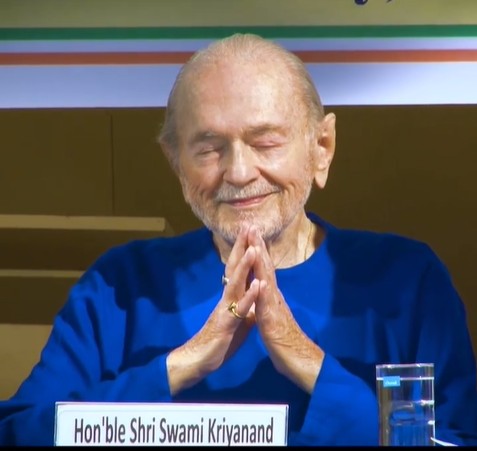
Sharing Master’s Teachings with Others
Swamiji was perfect in his way of tuning in to each one of us, to every individual that he spoke to. He understood how a person would be able to receive what he wanted to give as a disciple of a great Master. It has been a blessing for all of us who didn’t know Yogananda to have instead known Swamiji who was his direct disciple. So much of what we know of Yogananda is from Swamiji. He has tried to share through his books and all his music as much of Master as he could. Sometimes people would ask, ‘could you tell us the story of Master’, and he would pause for a moment and he’d say, ‘you know I don’t have stories that I can just pick up out of my pocket and tell of Master.’ And in the situation that he was in, he was able to think of a story that was a lesson or some quality that Master showed that the people who were there needed to hear. I always felt that this was largely a part of Swamiji’s own humility.
Humility: The Foundation of True Discipleship
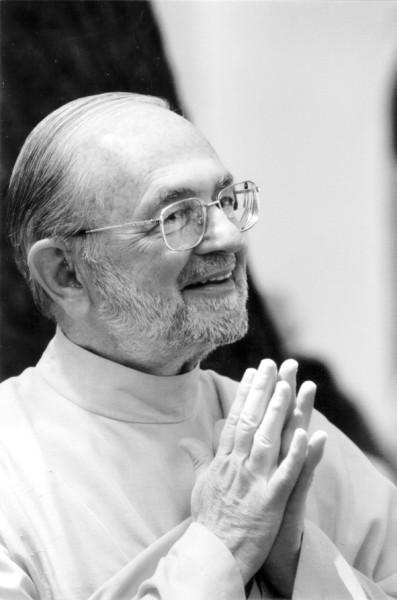
When he talked about discipleship he talked about the need to be humble to be able to receive. For the devotee it’s very important to be willing to show that, ‘we don’t know’ and Swamiji never felt that he knew everything. He never pulled the Yogananda card out of his pocket and say, “I know because I was with Yogananda and you should listen to me” He was very humble in his familiarity with Yogananda because he knew that in order to be able to learn we can’t already say, ‘I know’, as soon as we say, ‘ I know’, we’ve cut off the energy that is trying to help us to know. Swamiji was always willing to learn from anyone, and I think this was one of the greatest lessons that he tried to give to everyone who was close to him and everyone who was in any kind of a training class for being ministers, for being light bearers, for being teachers. He helped us realize that we all can learn from anyone who comes to us. God is often trying to come to us, Yogananda, our Master is often trying to come to us through the humblest person to help us to learn that lesson.
Courage to Go Beyond Limitations
The other quality that I admire in Swamiji is the quality of courage, because that’s the quality that I lacked in my life and he has tried to encourage that in me. Master always said, ‘Try to do something new every day. Bite off more than you can chew and then chew it.’ It was Master’s way of saying; ‘you are so much more than you think you are and you need to have the courage to go beyond your own limitations.’
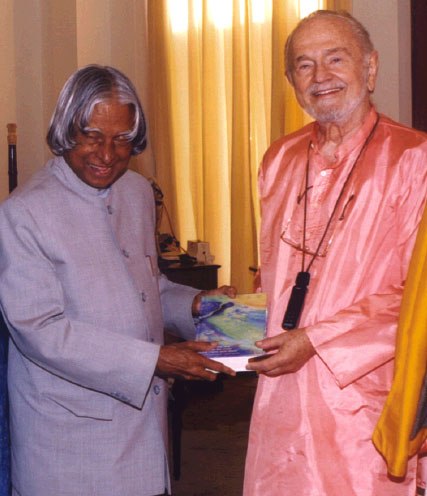
Swamiji when he was a student of Master’s, didn’t do much of Ananda yoga, he always said his body didn’t really seem to be made for practicing yoga and yet, when Master, in front of everyone asked him, ‘Walter would you please come and demonstrate the postures,’ Swamiji did it, because he knew if Master asked him to do that then that would help him to overcome his own limitations.
Building Ananda Through Courage and Cooperation
Swamiji was very courageous particularly where it concerned Yogananda’s work. He decided to do the work of creating communities because the SRF wasn’t interested in doing that. Daya Mata had said she wasn’t interested. So, he put all his energy for Master’s work into creating Ananda communities and we’re all very grateful for that. It was his courage that led to development of Master’s World Brotherhood Colonies. He knew that it was something that Master wanted to be done but he didn’t have the experience. He had inspiration, but he didn’t have the experience of doing it. He created the foundation of Ananda by drawing on people like Jyotish and Jaya and those who were there in the very beginning. He asked them, ‘Would you like to help?’ and they would help. He wasn’t a leader who felt that he had to show that he knew how to do everything. He had the courage to be humble in the situations where he could draw on others to be able to help him to build this work. When he talks about trying to build a building, he had no experience as a carpenter and yet he had the courage to try, to keep going and be able to work with people. His courage was one of involving people rather than the courage of ‘I can do it alone’.
Standing for Dharma Through Life’s Trials
Swamiji had to face a lot of trials in his life and some of them were actual legal trials. He did not give in when it concerned the principle of being able to serve Master’s work. He knew that everyone who was at Ananda were all dedicated to Yogananda, to this path of self-realization, to Kriya Yoga, to their practices and he didn’t want to give up on something that he knew Master had wanted. In a legal trial he fought against his own guru bhais and it was not easy for him to do that. But he would not abandon Dharma because his guru bhais were seeing something that was not true. Ananda still exists today and has the spiritual power and the ability to touch so many lives today because Swamiji had the courage to stand alone amidst his guru bhais with the help of his devotees that he had brought to this path of Kriya. With his courage he taught us at Ananda, and he taught the leadership of Ananda that, ‘sometimes you will have to face alone, something that is very difficult, but if you know that it’s right and you stand for what is right, then Dharma in the end will win.’
A Victorious Life Dedicated to Master’s Mission
Master says, ‘An easy life is not a victorious life’ and we can’t say that Swamiji had an easy life, but he did have a victorious life. He was victorious in building the dream of World Brotherhood Colonies in America, Europe and India. He was victorious in bringing Master’s teachings in their original forms. First in the English language and then the translations into many other languages. He was victorious in touching the lives of all of those who came because he was a direct disciple of a great Master and Avatar. Master once told Swamiji, ‘the men in the ashram have disappointed me and you can’t disappoint me.’
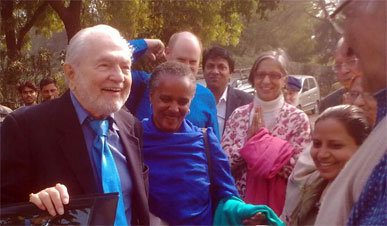
How Swamiji took that was not that these men were not good devotees or good in their spiritual life but that he really needed someone who would follow in the steps that he had brought to the West and really carry this teaching into the countries and the parts of the world that Yogananda himself was not able to go to personally. In the end Swamiji came back to India to do the same thing.
Bringing Yogananda’s Teachings Back to India
When Swamiji thought about coming to India it was always with the question, ‘Is Master known in India? Are Yogananda’s teachings being given the importance in the spiritual life as other teachers? He knew what Master had to offer and sometimes he would think this was not really happening and then he would talk about coming to India. He saw books that were coming out. There were new books coming with Master’s teachings which were being printed by YSS and he’d say, ‘oh no they are doing it, they’re getting Master out, this is a good thing.’ Until a couple, who had been publishing these books for YSS got hold of Swamiji through email. They had been removed from that position, so there was no one now publishing the books. They called Swamiji and said, ‘may we come to Italy to see you’, and they came. They shared what was happening and from that moment Swamiji said, ‘we’re going to India because the ability to bring Master to his own people in India is being squashed and we need to make sure that Master doesn’t get shut out of his own country.’
Swamiji’s Mission in India at the Age of Eighty
Swamiji left within a couple of weeks, and he had Asha, David, Durga, Vidura and other people who came with him, and they found the first house in Gurgaon that served as the ashram there for many years. Swamiji was about 80 years old at that time, he was at the age of most people’s retirement. It was not a time when most people take on grand work of making Master well known in India, but he had the courage and the will to make that happen and so he came to India.
Carrying Forward the Spirit of Discipleship
It was such a joy to see the light in the eyes and the souls of the people who were just waiting for this to come in the way that Swami Kriyananda and the people of Ananda could do. We all can try in our own way, in our own life to have the courage to bring Master to others in whatever way he would like us to. We too will find that Master works through us, in whatever ways we allow him to and that is what I hope for this beautiful community in Pune. It will grow as the other Ananda communities have, representing Yogananda’s teachings and Master’s qualities of discipleship for many generations to come.
One Comment
Swamiji’s Victorious Life dedicated to Master’s Mission 🙏