When I was thinking of how to appreciate Swami Kriyananda, I came up with sixty-eight points. But then I thought I should narrow it down to nine or maybe three. What follows are just three: gratitude, training, and love of God.
First Meeting: The Gift of Gratitude
When I first met Swami Kriyananda, it was in 1999. I had come to Ananda in 1996, and at that time Swami was living in Italy. I was on the East Coast, and so if you wanted to see him, you had to go to Italy. As part of what I felt was due diligence on this path, I thought I should go and meet the founder. And so, I flew to Italy.
He was giving a Saturday satsang which he hadn’t given in a while, because at that time his health wasn’t particularly strong. People said, “He hasn’t been well, we’re not sure if he’s going to give the satsang.” And then it was announced that he would. I was sitting in the front row. I expected a quiet entrance from this man who was, to my mind, advanced in years and who had been ill.
It was as if the doors had been blown off their hinges. He strode up the aisle, and this huge energy just engulfed everything. I was electrified. He sat in the chair and said, “Because there is a Kriya ceremony tonight, let’s meditate together.”
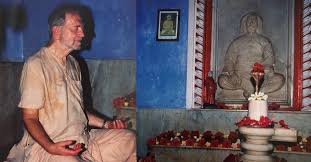
In the meditation I began feeling more and more agitated-not knowing what to do, and then I realized: I was trying to get him to notice me. I was trying to get something from him. And I thought: think of all that he has already given me, even if I had never met him, his writings, his music, all these wonderful souls at Ananda, the teachers I had had. And so, I thought, let me just thank him.
All of that tension and heat dissolved. I felt a cooling wave, and I thought: what can I give? I can only give my gratitude.
That giving of gratitude is so important — it completes the cycle of what we receive, and it also continues that cycle in motion.
As he walked out of the temple afterward, we followed him to his car. Though I felt deep gratitude, I did say, “Swamiji, I’m Dharmaraj.” I had written a few letters to him, and he said, “Oh, you’re Dharmaraj. Somehow I thought you’d be taller.” But then he added: “Isn’t it funny how we build up impressions of people?” It took me some time to realize he was saying:
Let aside your impressions. Get to know me.
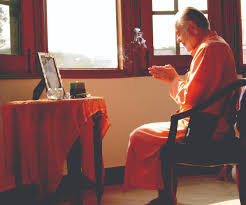
As Master said, “Get to know me in meditation.” As Swami Kriyananda himself once said, “If you want to know me, listen to my music.”
Training: What Ananda Stands For
Some years later, my wife Dharmini and I went to India. In America, if you open your wallet and someone sees a picture of Yogananda, they might say, “Oh, is that your mother?” In India, when people see that same wallet, they say, “Oh, is that your guru?” It was a very different experience.
While there, I was trying to understand what Ananda is in India, and who Swami Kriyananda is in that context. I realized that many of the things I had identified with – having a guru, being part of an ashram, practicing Kriya Yoga were not unique in India. I wondered: what, then, distinguishes Ananda?
One experience helped clarify this. Dharmini and I visited an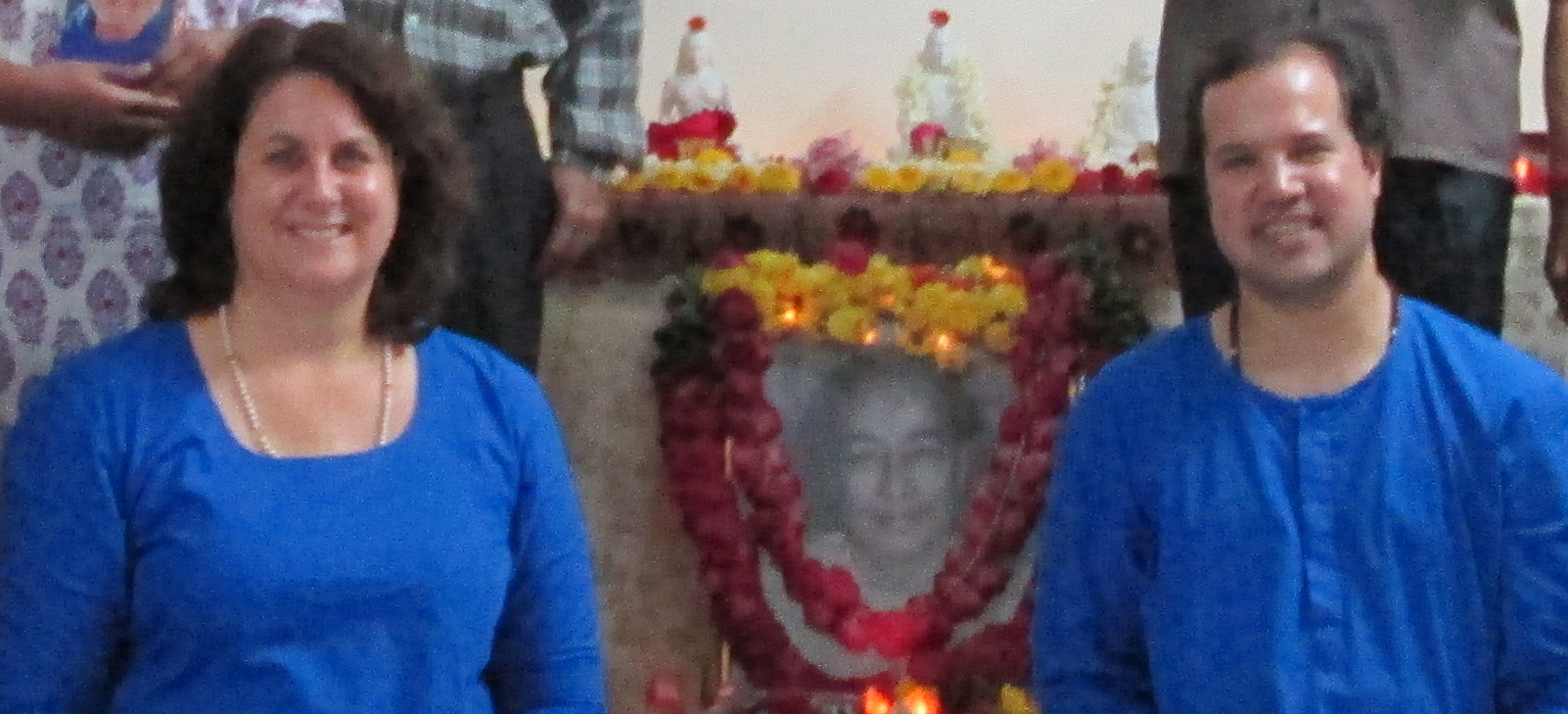 American-born Swami who lived in India. During our time together, I noticed an attitude in him that was dismissive toward the local people. Later, Dharmini said to me, “Swamiji would never have let us get away with that.”
And that brought it home to me: we have been trained.
I had a dream that spoke to this. I was walking by the room where Swami Kriyananda was staying, visiting a colony, and he came out dressed in his blue robe. He said, “What I have seen in India is that the Swamis in their orange robes have so much pride. Of what use is a renunciation that encourages pride? The goal of renunciation is to give up the ego.”
A friend gestured toward his own blue robe as if to say, “Well, we have to watch out that we don’t become proud of our blue robes.” And so, Swami went into the room for a radio interview. As he was going through the door, I called out, “Swamiji, if we are not proud, it is only because you have trained us.” I wasn’t even sure he had heard me. But as the door was closing, he looked me in the eye and said:
“Truly.”
Then I woke up, and coincidentally, I looked at my phone and found a message from Devi asking me to speak this weekend.
In India, people say: “Swami Kriyananda’s people are kind, respectful – they listen to others and tolerate different perspectives.” A man once said to Swamiji, “I can always tell an Ananda person.” Swami thought, “But we’re a community of eccentrics, how could you possibly identify one?” The man said, “Because they’re kind and respectful.” And Swami thought: “That’s a pretty good criterion of uniformity.”
Yogananda said, “You cannot win the love of God if you haven’t won the love of man.” It matters how we act in this world, and how we act with each other. We know this because of what we have seen Swami do himself, and what we have seen in those he has trained.
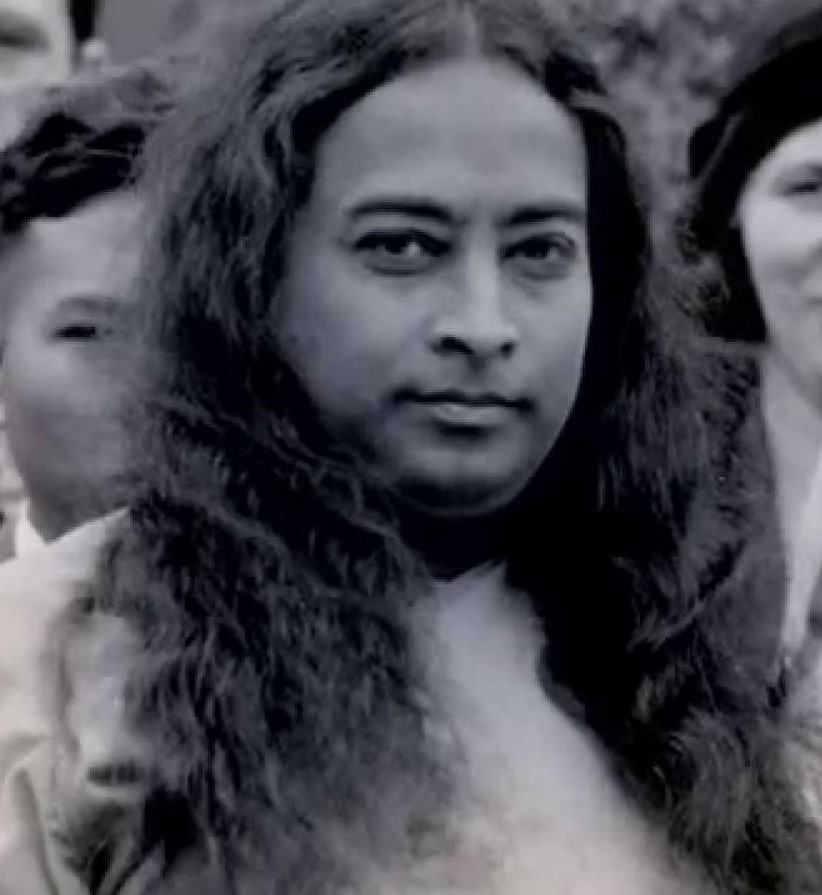
Phil Goldberg, who wrote American Veda, told us: “I think Ananda is one of the healthier communities out of all that I’ve studied. That is a credit to Swami Kriyananda – in part because of his ability to cultivate people, and because he has been able to incorporate renunciation alongside a householder path.” As Swami himself said:
This world needs the examples of married people with children living for God. Whether you renounce outwardly or live inwardly as a renunciate, it only matters if you are living inwardly as a renunciate.
The Third Point: Love of God
What moves me most about Swami Kriyananda is not any of his accomplishments, not his books, not his music, not the communities he built. A perfect expression is still not what he calls us to. He is always calling us as he himself is called to love God more deeply and to become one with God. That is the goal.
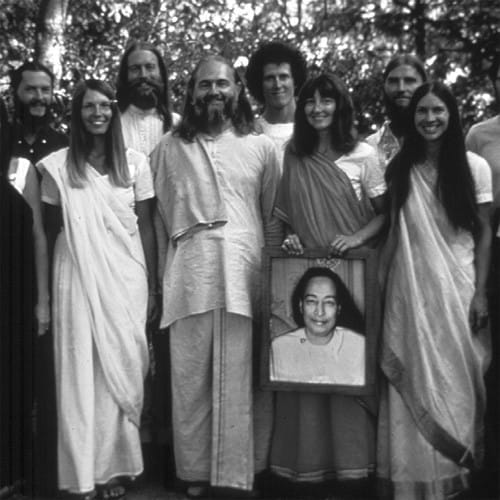
Whether we play the outward drama of all the lovely things that we do and share with others, or whether we sit in a cave and meditate, the goal is the same.
His bliss flows so powerfully and so palpably. Just yesterday, a dentist here at the Sierra Family Clinic was talking to me about Ananda and said, “He came here once to get his teeth worked on.” And she said: “He was so warm. There was so much love coming from him. You could really feel that he’s one with God.”
Swami Kriyananda was interviewed recently for a magazine in Los Angeles. He was asked: “Do you find that people joining Ananda are different from the way they were fifty years ago?”
Yes, they are more earnest in their search for meaning in life.
And then he was asked: “What message would you like to leave with our readers?”
There is only one purpose in life: to love God. Toward this end, we should love him in all, serve him in all, and cooperate always with his will.
In living with Swami Kriyananda, we feel that we have lived with Paramahamsa Yogananda. And in a very true sense, we have.
[Tribute talk delivered by Nayaswami Dharmarajan on May 18, 2012, on the occasion of Swami Kriyananda’s 86th birthday celebration.]